
Table of Contents6Section)
For two, one main dish, one meat course, and one soup are enough. For groups of four or more, add a大盘鸡 (Big Plate Chicken) to lower the per-person cost. With dishes organized into five categories—mains, grilled meats, stews, noodles/buns, and desserts—you'll rarely order duplicates and avoid leaving half the table empty. Order by headcount for a stress-free meal.
How should two people order Xinjiang cuisine? Is one staple dish, one meat dish, and one soup enough?#
Order one: either pilaf or mixed noodles, plus a serving of grilled meat and a bowl of soup rice or yogurt. You'll be full with nothing left over. Xinjiang cuisine can be oily; the soup and yogurt help cut through the richness. When dining in a group, order the meat first and add the staple later to keep the table well-stocked.
Order by headcount first, then weight: 1 kg for 2–3 people, 2 kg for 4–6. Follow this to avoid leaving half uneaten and make reheating leftovers easier.
If you're unsure, order two dishes to start and add more after tasting. Xinjiang cuisine isn't served quickly, so eat naan while waiting for your main dishes. Naan arrives first—have some to tide you over; there's no need to rush even if the main courses take time.
How many people does one serving of Big Plate Chicken serve? Would you like to add wide noodles?#
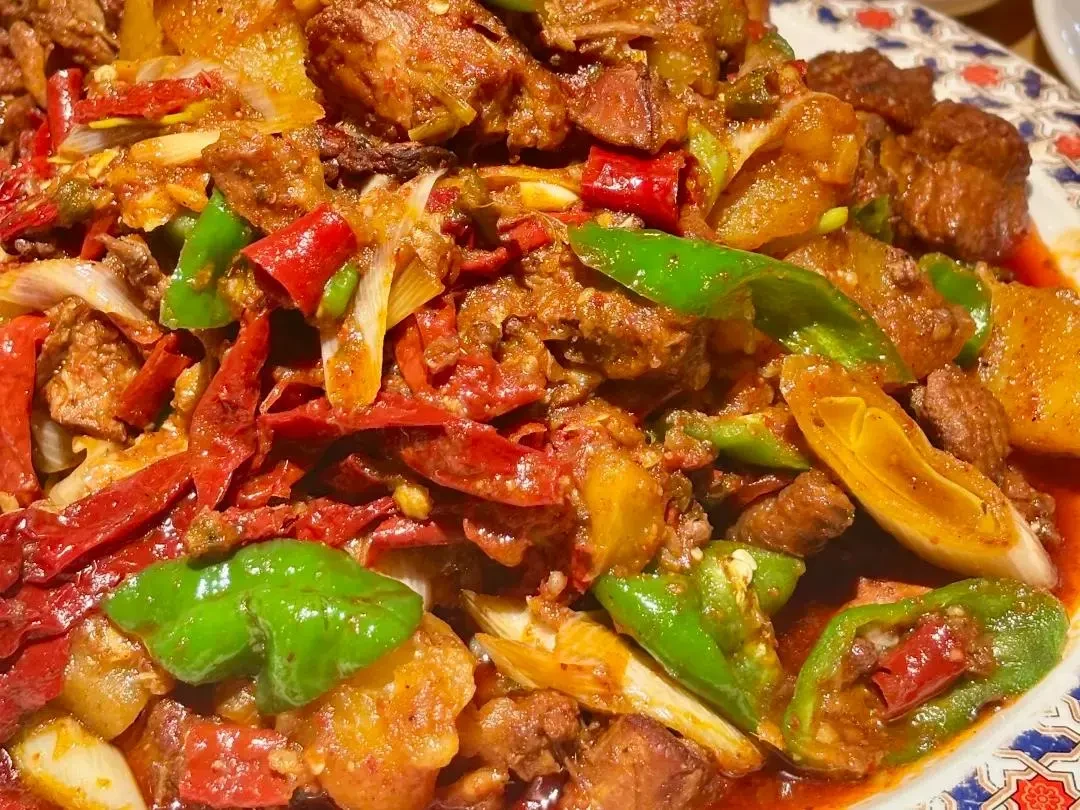
One serving feeds two to four people, depending on the side dishes. Chicken pieces and potatoes are stewed together; halfway through, add hand-pulled noodles. The dish is most flavorful when the sauce has reduced nearly completely. Half portions aren't common at many restaurants, but a quick inquiry usually gets you what you need.
Ordering slow-to-serve dishes like Big Plate Chicken isn't ideal if you're in a rush. For small groups, order the small portion—don't assume the menu's large serving size applies; Xinjiang portions are typically more generous than those inland. Add the hand-pulled noodles later; they get soggy if cooked too long. Request them midway through your meal if needed.
Spiciness level is customizable; please inform us in advance if you cannot tolerate spicy food. Request extra noodles early—our hand-rolled noodles take longer to cook, and waiting can be awkward. The potatoes in Big Plate Chicken should be stewed until tender for the best taste; rushing won't help.
Which is more filling: pilaf or tossed noodles? What toppings should you order for each?#
Both are filling. Pilaf is oily; one serving keeps you full for half the day. Hand-pulled noodles allow free refills, with fresh stir-fried toppings. The most common options are sliced pork with oil and scrambled eggs with tomatoes. Toppings can be swapped—ask what's available before ordering.
Two people sharing one plate of pilaf and one serving of mixed noodles is a better option than ordering separate portions, leaving room for grilled meat. Pilaf tends to be oily; pair it with yogurt or a cold salad.
Urumqi's pilaf portions are generous; Kashgar's tends to be sweeter—ask before ordering. Hand-pulled noodles come with freshly stir-fried toppings, so expect a longer wait than for pilaf. The carrots in the pilaf are cut unevenly; the thicker pieces deliver more sweetness.
Should I order skewers by count or by weight? How many skewers should one person eat?#
Small portions are sold by skewer; 5–8 skewers per person is typical. For larger groups, order by kilogram—Naan Pit meat is crispy outside and tender inside; 1 kg suffices for 2–3 people. Whole roasted lamb must be ordered whole and is suitable for 8+ guests. Specify the quantity based on your guest count; do not estimate yourself.
Freshly skewered and roasted on-site. Start with a small portion to taste, then order more. Adjust spice level as needed—less chili powder for those who can't handle heat. Roasted meat loses tenderness when reheated after takeaway; best enjoyed fresh. Naan-kang (tandoori) meat is sold by weight; try half a kilogram if you're dining alone or in a small group.
Slice the naan-oven meat into small pieces before eating; avoid biting it whole. The exterior is crispy while the interior remains tender. Pair with onions to cut through the richness, as the texture deteriorates significantly when cold. When slicing, follow the grain—do not chop across it.
How do you pair naan with thin-skinned buns? What should I eat for breakfast?#
One naan is enough for a whole table to tear and share. It stays fresh, making it perfect for travel. Freshly steamed thin-crust buns are sold hot; bite in and sip the broth first—watch out for burns! Naan works as a main dish or a convenient snack on the go.
Breakfast: naan with milk tea, or two thin-skinned buns with a bowl of rice soup—simple and filling. Some small shops run out after lunch, so eat early if you want them. Rice soup is available all day; it's perfect when your stomach feels off.
Naan comes in several varieties, including sesame, onion, and oil naan. Oil naan stays fresh longer. Buy a couple to keep in your car—they're perfect for snacking during traffic jams.
When will the yogurt and fruit be served? How can I pair something sweet to cut through the richness?#
Serve yogurt rice as a snack or after a meal; one portion is enough. Hand-churned ice cream melts quickly, so eat it right away. The sweet cake is rich and dense—buy a small slice to taste. Walnuts and raisins are packed tightly; thin slices pair perfectly with tea.
Grapes, melons, and pears are in peak season from September to October. Grab a few after your meal to take back to your lodging. The bazaars in Southern Xinjiang are great for buying dried fruits.Kashgar Old CityThere are many stalls in the surrounding alleys. You can sample dried fruits at the bazaar, but be sure to ask for the price before buying.
YiningYining Liuxing StreetA concentrated area of street food, perfect for eating on the go. Expect flavor variations as you cross different districts; see itinerary suggestions below.Hi, tour in Southern Xinjiang for 7 daysThe city where you land, separating mealtime from travel time. Yogurt with honey tastes smoother than with sugar; if it's too tart for you, add less.
Xinjiang China International Travel Service
Consultation Hotline:18999127242
Homewww.xjgllxs.com

What are Xinjiang's signature dishes? How do you enjoy Big Plate Chicken, skewered lamb, pilaf, and Bazaar snacks?
Xinjiang cuisine is known for its generous portions and bold flavors: Big Plate Chicken served with wide noodles, skewered kebabs sold by the piece, pilaf packed with lamb and carrots, and naan that's best fresh out of the oven. Bazaars also offer yogurt, baked buns, and rice intestines. Order based on your group size—two people ordering three dishes often leaves leftovers. Start with fewer items; you can always order more if needed.

